How to Organize a Tiny Kitchen
As an Amazon Associate I earn from qualifying purchases.
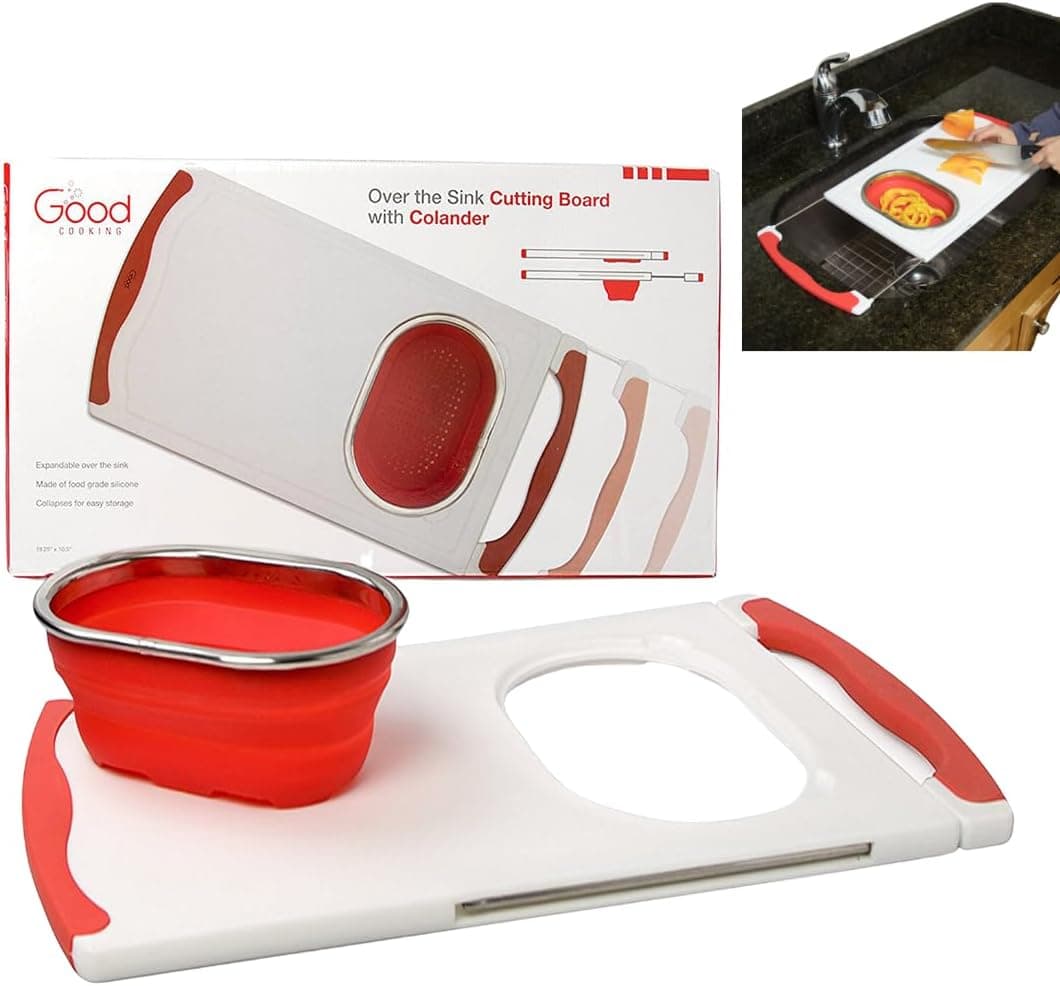
A tiny kitchen does not have to feel cramped. The trick is treating the whole room as a set of zones and giving each tool a home that matches how often you reach for it. This guide walks you through prep, cooking, cleanup, and storage areas one at a time, so you can build a layout that stays tidy through real, everyday cooking instead of only on photo day.
Start With Your Prep Zone
Your prep zone is where most of the daily mess happens, so it deserves the first pass. Clear everything off the counter, then bring back only the items you use during an average week. Everything else can move to a drawer or a shelf, which frees up the flat surface you actually chop and mix on.
One of the biggest wins in a small prep zone is borrowing space from the sink. A board that spans the basin turns dead space into a working surface, giving you room to slice without fighting for counter inches. It is a simple swap that changes how the whole room flows.
Get Knives Off the Counter
A knife block eats a surprising amount of counter real estate for the number of blades it holds. In a tiny kitchen, that footprint is hard to justify. Moving your knives onto the wall clears the counter and keeps sharp edges out of a crowded drawer where they dull and become a hazard.
A wall-mounted strip keeps each blade visible and within reach of your prep zone. Mount it near the cutting area rather than across the room, so grabbing and returning a knife stays a one-step motion. The vertical space above a counter is almost always underused, and this is an easy way to claim it.
Use the Space Under Your Shelves
Look at any shelf in your kitchen and you will usually see a band of empty air between the top of your stored items and the shelf above. That gap is wasted volume. Reclaiming it is one of the fastest ways to add storage without buying a single new cabinet.
Baskets that slide onto the underside of a shelf turn that dead air into a second tier for napkins, wraps, or lightweight pantry items. Because they hang rather than stack, they keep the shelf below clear and make it easy to see what you have at a glance.
Add Movable Storage You Can Roll Away
When wall and cabinet space runs out, the answer is often furniture that moves. A narrow cart can tuck into a gap beside the fridge or under a window, then roll out to become an extra prep surface or a serving station when you need it.
The flexibility is the point. In a tiny kitchen, one piece that does several jobs beats three pieces that each do one. Park it where it fits, load the shelves with the gear you reach for most, and wheel it into the action only when the moment calls for it.
Standardize Your Food Storage
Mismatched containers are a quiet space thief. Round tubs, odd lids, and bags that will not stand up waste room and make cabinets look chaotic. Switching to one system that stacks cleanly recovers space you did not know you were losing.
Containers built to nest and stack let you square off a shelf and use its full height. Clear walls help you spot leftovers before they go bad, and a shared lid size means you stop hunting for the match every time you pack lunch. Consistency is what keeps a small kitchen organized long term.